








KARAKALPAK RESEARCH INSTITUTE OF HUMANITIES

Year of foundation: The Institute was founded in 2012 on the basis of two institutes – the Institute of History, Archeology and Ethnography and the Institute of Language and Literature named after N. Davkarayev of the Karakalpak branch of the Academy of Sciences of Uzbekistan, in accordance with Resolution of the Cabinet of Ministers of the Republic of Uzbekistan No. 33 dated 02/07/2012 and Order of the Academy of Sciences of the Republic of Uzbekistan No. 5-21 dated 02/09/2012.
Contact Details
Addres: 230100, Nukus, St. Amira Temura, 179-a; Uzbekistan.
Phone No: +(998-61)-222-85-47
e-mail: kk_gumanitar@aknuk.uz
The head of the Institute: BEKIMBETOV AZAMAT MIRZABAEVICH.
The staff: Doctors of Science – 10; Candidates of Science/PhD – 9; doctoral students – 38; scientific workers – 32; total employees – 69.
- KARAKALPAK LANGUAGE AND LITERATURE
Main areas of research:
– development of problems of history and dialectology of the Karakalpak language;
– study of the word-formation system of the Karakalpak language;
– study of issues of the syntactic structure of the modern Karakalpak language in the semantic aspect;
– study of the history of Karakalpak folklore;
– study of the ways of formation of Karakalpak literary science;
– studying the problem of genres and types of modern Karakalpak literature in the light of the ideology of national independence;
– restoration and restoration of recordings of Karakalpak melodies and epics stored in the fund of musical sound recordings at the Institute;
– multidimensional study of Karakalpak literature, which is a powerful mechanism for the formation of high spirituality;
– study of Karakalpak prose and poetry of the period of independence, as components of a single national literary process, with special attention paid to the problem of national identity, its representation in literary texts;
– study of the spiritual and aesthetic values of Karakalpak classical literature in the light of the ideas of national independence; preparation for publication of a multi-volume collection of works by classics of Karakalpak literature;
– development and implementation of new methods for studying the modern Karakalpak language and its history, taking into account genetic, territorial, systemic and functional properties. Study of a number of fundamental and applied branches of linguistics – ethno sociolinguistics, linguistic cultural studies, comparative and typological linguistics, linguistic regional studies, toponymy;
– creation of a lexicographic complex of explanatory, bilingual and multilingual translation dictionaries in order to replenish the source base of the Karakalpak language and which will be widely used in scientific, translation and teaching activities;
– examination, examination, documentation, preservation and restoration, replenishment of the fund of folklore and ethnographic materials, transferring them to electronic media (card files, funds, folklore and ethnographic archives, websites, etc.);
– continuation of work on the publication of the next volumes of the 100-volume collection “Karakalpak folklore”.
The most important results of fundamental research:
– section prepared: “Characteristics of official documents of the Karakalpaks in the 18th-19th and early 20th centuries”;
– a brief excursion on the history of linguistic semantics has been prepared and the tasks of studying the semantic structure of complex sentences of the Karakalpak language have been considered;
– scientific comments to the Karakalpak epics were compiled, an introduction to the texts and complete passport data of the epics, music and photographic materials were prepared, textual work was carried out on all variants;
– the genres of lyrical works of Karakalpak literature (epigrams, parodies, cartoons and humorous poems), as well as dramatic types – tragicomedy, historical drama, fantastic drama, dramatic tragedy, modern epics, were studied and analyzed, their unique features were determined;
– the issues of psychologism in the disclosure of images in Karakalpak classical literature have been studied;
– materials on the formation and development of Karakalpak literary science were studied and systematized;
– a scientific analysis of the written monument “Avesto” and the epic of the Massagetae, as the sources of Karakalpak folklore genres, was carried out;
– the monograph “Compound sentences of the Karakalpak language in the aspect of the problem of identities and differences” was prepared.
Practical developments:
Prepared and published by:
Textbook for university students “Introduction to Turkic Philology” (2008);
Ajiniyaz. Collected works. – Nukus, “Ilim”, 2014, 248 pp.;
Calques in the modern Karakalpak language. – Nukus, “Ilim”, 2014. 68 p.;
Karakalpak philology. Bibliographic index. – Nukus, “Karakalpakstan”, 2014. 52 p.;
100-volume edition “Karakalpak folklore” 2007-2015;
“Ájiniyazdıń Qırda dóretken qosıqları hám qazaq shayırları menen ruwxıy pikirlesligi” (2015);
“Qaraqalpaq qaharmanlıq dástanları − milliy qádiriyatlar dáregi” (2017);
The “Mangu Meros” series includes works by Ajiniyaz (2015) and Berdakh (2017);
“Milliy dástanlarımız – ruwxıy hám materiallıq mádeniyatımızdıń hasıl úlgileri (Qaraqalpaq qaharmanlıq dástanların tarixıy-fol’klorlıq izertlew tájriybesi)” (2018);
More than 2000 manuscripts were analyzed and 2 volumes of “Karakalpak folk lyrical songs” were prepared;
Bekbergenova Z., Palymbetov K., Bainiyazova T., Nuratdinova G. “Anthology of Karakalpak poetry of the twentieth century.” Nukus, Bilim, 2018 in Karakalpak language;
Textbook for 9th grades of secondary schools, authors Bekbergenova Z. and others. Adebiyat. – Nukus: Bilim, 2014.
- HISTORY, ARCHEOLOGY AND ETHNOGRAPHY
Main areas of research:
– problems of history, archeology and ethnography of the peoples of Karakalpakstan;
– studying the place and role of Islam in the cultural-historical process and spiritual life of the peoples of Karakalpakstan, issues of modern transformation of the religious consciousness of the population and the influence of ongoing processes in the Muslim world on this region;
– study of the material culture of the people: a comprehensive study of the traditional costume of the Karakalpaks in the system of material culture of the people, description and reconstruction of its structure and functions, interpretation of its semantics and through this the disclosure of ethnic contacts and the ethnic identity of the people;
– research of modern traditional institutions, traditional etiquette, identifying the reasons for the transformation of these spheres of culture, tracing the process of formation, evolution and historical dynamics;
– research into the socio-economic and political history of the peoples of Karakalpakstan from the 12th century to the present, ethno-demographic processes, the colonial policy of royal Russia, people’s liberation movements, the formation of Karakalpak statehood, content analysis of periodicals of the Soviet period, everyday history of Karakalpak society , history of the problem of the Aral Sea tragedy, the repressive policies of Stalinism, economics and culture of the 20th and 21st centuries;
– study of archaeological monuments of Karakalpakstan;
– study of the spread of Zoroastrian culture in the territory of the Southern Aral Sea region;
– study of the process of urbanization during the periods of antiquity and the Middle Ages;
– study of the funeral rites and culture of the nomads of the Aral-Caspian region;
– study of the spread of Islam, as well as its relationship with pre-Islamic cults in the Southern Aral Sea region (using the example of Mizdahkan);
– study of the cities of Karakalpakstan and their population in the social, cultural and ethnic dimensions (from antiquity to modern times).
Unique scientific objects and collections:
Collection of archaeological, anthropological and numismatic collections with the Aral Sea Archeology Museum”, on the basis of which fundamental and applied scientific archaeological research of the region is carried out. The facility’s funds provide a unique source base for research.
A unique object with the manuscript collection of the Fundamental Library, representing handwritten material for the study and research of the history and culture of the peoples of the Southern Aral Sea region. The handwritten material of the library collection is widely used by scientists and researchers of various branches of science throughout the region and foreign countries in the fields of science, history, ethnography, archeology, literature and folklore.
The most important results of fundamental research:
– the features and role of religion in the everyday life of the peoples of Karakalpakstan have been studied;
– a multi-volume series “History and Culture of Karakalpakstan” has been prepared for publication, covering historical and cultural processes on the territory of Karakalpakstan from ancient times to the present day;
– the issues of establishing Soviet power were reviewed, the policy of national-territorial demarcation of Central Asia and the formation of the Karakalpak Autonomous Region was assessed, the issues of socio-economic and cultural change in Karakalpak society in 1917-1991 were analyzed. New archival documents from the archival repositories of Russia (Moscow), Karakalpakstan (Almaty), Uzbekistan (Tashkent) and Karakalpakstan (Nukus) have been introduced into scientific circulation;
– the relationship between Zoroastrianism and pastoral cults in South-Eastern Ustyurt was revealed, where syncretic forms of funeral rituals were registered;
– a field study of the fourth part of the Akshakhan-Kala (Kazakly-Yatkan) Ceremonial Complex was completed, where numerous fragments of polychrome wall painting were discovered. The most interesting objects of the discovered painting are portraits and scenes of the “Procession”. The painting is dated to the 2nd-1st centuries. BC. Presumably, the portraits depict representatives of the ruling dynasty, in whose hands there was power over Khorezm even before the start of minting the Khorezm coin. Perhaps the portraits represent the first material evidence of the first ancient Khorezmian royal dynasty of the Siyavushids. The text under one of the portraits with the ideogram “tsar” and the name of the tsar confirms the royal affiliation of the portraits;
– the use of geoinformation technologies and remote sensing data made it possible to take a different look at the archaeological phenomenon of “arrow-shaped layouts”, which was studied by archaeologists of the Institute in the 70s and 80s. XX century If, based on the results of past years, it was believed that well-known groups of structures used by the ancient nomadic population formed local groups, then it has now been established that groups of arrow-shaped structures could form grandiose systems covering the Ustyurt plateau for hundreds of kilometers. An example of this is the North Ustyurt system of hunting structures, covering the Ustyurt plateau along the line of Cape Duana (Eastern cliff of Ustyurt) – salt marshes of Asmatai-Matai/Kosbulak – salt marsh of Shomishtykol (Western cliff of Ustyurt);
– the evolution of traditional Karakalpak clothing is traced and some of its forms are analyzed;
– a new archaeological oasis was discovered – the ancient Tashkyrman; all archaeological sites of the oasis were explored; new archaeological sites were discovered in the Kungrad (caravanserai and burial mound Gunzheli) and Takhiatash regions; The study of the fortification of Ancient Khorezm at the site of Akshakhan-kala continues. The wall paintings of Akshakhan-kala were examined;
– the history of cities and urban settlements of Karakalpakstan, issues of the formation and functioning of urban culture have been studied; the history was studied and a classification was made of the political elite of Karakalpakstan (1925 – 1991), issues of political repression of the Soviet government in the 30s – 50s of the twentieth century were studied;
– for the first time, a source analysis of documentary materials on the history of the Karakalpak Autonomous Region was carried out and the issues of the formation of the administrative apparatus and the tragic moments of the collectivization of agriculture in 1925 – 1932 were studied;
– the issues of the formation and development of the periodical press of Karakalpakstan in the 1920s – 1940s were studied; a scientific analysis of the historical path of development of Karakalpakstan in 1991 – 2015 was carried out.
Practical developments
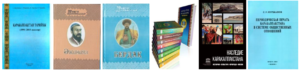
A monograph has been published in the form of the next issue of the collection “Archaeology of the Aral Sea region”, dedicated to the material culture and ethnic history of the ancient and medieval population based on materials from the Krantau Upland.
The collective work “New History of Karakalpakstan” was published.
Materials have been prepared for the publication of a multi-volume history of Karakalpakstan from ancient times to the present day.
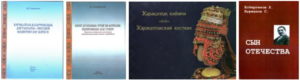
The VII issue of the series “Archaeology of the Aral Sea region” has been published. As a result of innovative research under the FA-I1-G11 project “Preparation and publication of the photo album “Karakalpak Costume”, the Photo Album “Karakalpak Costume” was published (Karlybaev M.A., Kurbanova Z.I., Nukus: Ilim, 2013).
Monographs published:
– “Karakalpak Autonomous Region: history in sources” (Nukus: Ilim, 2014);
– “O’zbekiston obidalaridagi bitiklar: Qoraqalpog’iston” (Tashkent, 2015);
– “Periodic press of Karakalpakstan in the system of public relations” (2015);
– “History of Karakalpakstan (1991-2015)”, (Nukus, 2018);
– “Berdakh. Selected works in Karakalpak and Uzbek languages” (Nukus, 2018);
– “Son of the Fatherland” (Nukus, 2018);
– “Qaraqalpaq adebiyattanıwı máseleleri” (Nukus: Ilim, 2019);
– “History and Archeology of the Aral Sea region” (Nukus: Bilim, 2019);
– “Akchakhan-Kala” (Nukus: Bilim. 2019);
– “Traditional social institutions of the Karakalpaks” (Nukus, 2019);
– “Qaraqalpaq tiliniń jańa tariyxı boyınsha ocherkler” (Nukus, 2021);
– “On the history of Islam among the Karakalpaks: historical, social, ethnic and genealogical contexts” (Nukus: Ilim, 2021), etc.
Prospects for the development of scientific research
Scientific research will be carried out in the following areas:
– study of Karakalpak prose and poetry of the period of independence, as components of a single national literary process;
– study of the spiritual and aesthetic values of Karakalpak classical literature in the light of the ideas of national independence;
– preparation for publication of a multi-volume collection of works by classics of Karakalpak literature;
– development and implementation of new methods for studying the modern Karakalpak language and its history, taking into account genetic, territorial, systemic and functional properties;
– creation of a lexicographic complex of explanatory, bilingual and multilingual translation dictionaries;
– examination, examination, documentation, preservation and restoration, replenishment of the fund of folklore and ethnographic materials, their translation into electronic form;
– study of modern history;
– study of the ethnic history of the Karakalpaks, the history of the region in the pre-colonial and colonial periods;
– historiography;
– archaeological study of ancient and medieval civilizations of the Aral Sea region and the surrounding nomadic, pastoral periphery;
– study of the material culture of the peoples of Karakalpakstan in general, the Karakalpaks in particular (traditional embroidery, traditional, national costume, etc.), as well as issues of spiritual culture at the present stage (behavioral and traditional etiquette, family and household rituals, faith and ideas etc.).